Top 10 Logo Design Trends: How to Make Your Brand Stand Out
Introduction
In today's highly competitive digital world, a logo is far more than a symbol—it is the visual identity of a brand. Whether you're launching a startup, rebranding an established company, or expanding your online presence, your logo serves as the first impression customers have of your business.
As branding evolves alongside technology, customer expectations, and design aesthetics, logo trends continue to shift. In 2026, businesses are focusing on simplicity, adaptability, AI-assisted creativity, and emotional connections to create memorable brand identities.
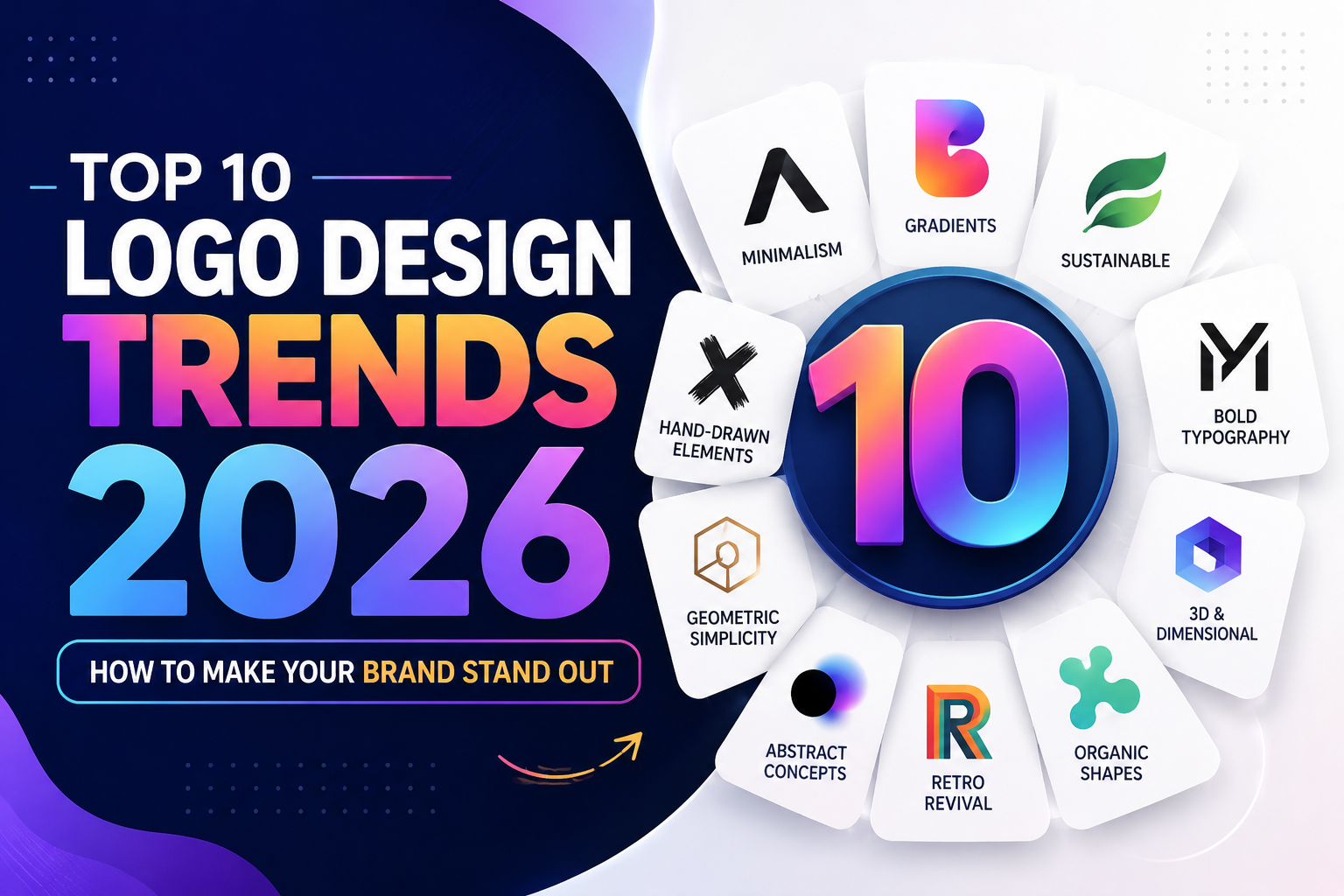
Understanding the latest logo design trends can help your brand remain modern, recognizable, and competitive. In this guide, we'll explore the top 10 logo design trends for 2026 and explain how you can leverage them to make your brand stand out.
Why Logo Design Matters in 2026
A logo influences:
- Brand recognition
- Customer trust
- Professional credibility
- Marketing effectiveness
- Social media visibility
- Website conversions
Research consistently shows that people form opinions about brands within seconds. A well-designed logo helps create a lasting impression and strengthens brand recall.
Modern logos also need to work seamlessly across:
- Websites
- Mobile apps
- Social media platforms
- Digital advertisements
- Packaging
- Business cards
- Videos and presentations
Because digital touchpoints are expanding, flexibility has become one of the most important aspects of logo design in 2026.
1. Minimalist Logo Designs
Minimalism continues to dominate branding in 2026.
Brands are moving away from overly detailed designs and embracing clean, simple visuals that are easy to recognize.
Characteristics
- Clean typography
- Limited color palettes
- Simple shapes
- Strong readability
Why Minimalism Works
- Easier brand recognition
- Better scalability
- Improved mobile visibility
- Timeless appearance
Examples
Many leading brands have simplified their logos over the years to create cleaner and more versatile identities.
2. AI-Assisted Logo Design
Artificial Intelligence is transforming branding.
AI-powered tools help designers generate concepts, color combinations, typography suggestions, and creative variations faster than ever.
Benefits
- Faster design process
- Multiple design options
- Cost efficiency
- Data-driven creativity
Human Creativity Still Matters
While AI enhances productivity, human designers remain essential for:
- Brand storytelling
- Emotional appeal
- Strategic thinking
- Customization
The future lies in combining AI technology with human creativity.
3. Responsive Logos
Modern brands require logos that adapt to different devices and screen sizes.
Responsive logos are flexible versions of the same identity.
Versions May Include
- Full logo
- Icon version
- Wordmark
- Monogram
- Social media favicon
Advantages
- Consistent branding
- Better mobile experience
- Improved readability
- Stronger user engagement
Responsive logo systems are becoming essential rather than optional.
4. Gradient and Vibrant Colors
Flat colors are giving way to dynamic gradients and vivid combinations.
Brands are using color psychology to create stronger emotional connections.
Popular Color Trends in 2026
- Electric blue
- Neon orange
- Purple gradients
- Emerald green
- Coral pink
- Metallic shades
Why Brands Use Gradients
- Modern appearance
- Enhanced depth
- Better visual appeal
- Increased memorability
Gradient logos help brands stand out in crowded digital environments.
5. Retro-Futuristic Designs
One of the biggest trends in 2026 is the blend of nostalgia and futuristic elements.
Retro-futuristic logos combine vintage inspiration with modern design principles.
Features
- Bold typography
- Metallic effects
- Neon accents
- Geometric patterns
Ideal For
- Tech companies
- Gaming brands
- Fashion brands
- Creative agencies
This style creates a unique balance between familiarity and innovation.
6. Custom Typography Logos
Typography is becoming the star of branding.
Many businesses are investing in custom lettering to create unique identities.
Benefits
- Exclusive brand personality
- Better memorability
- Increased authenticity
- Distinctive appearance
Popular Typography Styles
- Rounded fonts
- Geometric fonts
- Handwritten styles
- Serif-modern combinations
Typography-focused logos are particularly effective for premium and luxury brands.
7. Motion Logos and Animated Branding
Static branding is evolving into dynamic branding.
Animated logos are becoming increasingly popular because video content dominates digital marketing.
Where Motion Logos Are Used
- Websites
- YouTube intros
- Social media reels
- Advertisements
- Mobile applications
Benefits
- Higher engagement
- Stronger storytelling
- Enhanced user experience
- Improved brand recall
Brands in 2026 are designing logos with animation in mind from the very beginning.
8. Geometric Shapes and Symmetry
Geometric designs continue to gain popularity because they communicate balance, trust, and professionalism.
Common Shapes
- Circles
- Triangles
- Hexagons
- Squares
- Abstract patterns
Industries Using Geometric Logos
- Technology
- Finance
- Architecture
- Healthcare
Geometric logos often appear clean, modern, and highly scalable.
9. Eco-Friendly and Nature-Inspired Branding
Sustainability has become a major influence on branding.
Consumers increasingly prefer businesses that demonstrate environmental responsibility.
Design Elements
- Earth tones
- Leaf symbols
- Organic shapes
- Natural textures
- Green palettes
Suitable Industries
- Organic products
- Renewable energy
- Wellness brands
- Eco-conscious businesses
Nature-inspired logos communicate trust and responsibility.
10. Abstract Symbol Logos
Abstract logos allow brands to create unique identities that are not limited by literal representations.
Advantages
- Distinctiveness
- Timeless appeal
- Creative freedom
- Global recognition
Common Abstract Styles
- Fluid shapes
- Negative space designs
- Interlocking forms
- Geometric abstraction
Many globally recognized companies have built powerful identities through abstract symbols.
How to Choose the Right Logo Trend for Your Brand
Following trends blindly isn't always the best strategy.
Instead, consider:
1. Your Industry
Different industries have different visual expectations.
Technology
- Minimalism
- Geometric shapes
- Gradients
Luxury Brands
- Elegant typography
- Monograms
- Premium color schemes
Startups
- Responsive logos
- AI-assisted concepts
- Modern typography
Eco Brands
- Organic elements
- Earth tones
- Nature-inspired symbols
2. Your Target Audience
Understand your customers:
- Age group
- Preferences
- Lifestyle
- Buying behavior
Younger audiences often appreciate vibrant and experimental designs, while professional audiences may prefer cleaner and more sophisticated identities.
3. Long-Term Scalability
A great logo should remain relevant for years.
Ask yourself:
- Will this design age well?
- Is it easy to reproduce?
- Can it work across digital platforms?
- Does it represent our values?
Timelessness should always outweigh short-term trends.
Essential Elements of a Successful Logo
Regardless of trends, successful logos usually share these qualities:
Simplicity
Simple logos are easier to remember.
Memorability
Unique designs help brands stay in customers' minds.
Versatility
Logos should work on various mediums and sizes.
Relevance
Design should align with brand personality.
Timelessness
Avoid elements that may quickly become outdated.
Common Logo Design Mistakes to Avoid
Using Too Many Colors
Complex color combinations can confuse audiences.
Solution
Stick to two or three primary colors.
Following Trends Blindly
Trends change quickly.
Solution
Balance modern aesthetics with timeless principles.
Poor Typography
Unreadable fonts damage professionalism.
Solution
Choose clean, scalable typefaces.
Ignoring Mobile Users
Tiny details disappear on small screens.
Solution
Design for mobile-first experiences.
Copying Competitors
Imitation weakens brand identity.
Solution
Create unique and original concepts.
Future of Logo Design Beyond 2026
Several technologies will shape the next generation of branding:
AI-Powered Personalization
Brands may dynamically adapt logos based on customer preferences.
Augmented Reality Logos
Interactive logos could become common in AR environments.
3D Brand Experiences
Immersive branding will continue expanding.
Voice and Audio Logos
Audio identities will become more important with smart devices.
Dynamic Branding Systems
Brands will increasingly adopt flexible identities rather than static logos.
Why Professional Logo Design Matters
Although DIY tools have become popular, professional logo designers provide:
- Strategic thinking
- Brand consistency
- Custom typography
- Unique concepts
- Scalability
- Long-term brand value
A professionally designed logo is an investment rather than an expense.
Conclusion
Logo design in 2026 is driven by simplicity, flexibility, technology, and meaningful storytelling. From minimalist styles and custom typography to AI-assisted design and animated branding, businesses have more creative opportunities than ever before.
However, the best logos aren't necessarily the trendiest—they're the ones that genuinely represent a brand's identity and connect with its audience.
By understanding these top logo design trends and applying them strategically, businesses can build memorable brand identities that stand out in an increasingly competitive marketplace.
Frequently Asked Questions (FAQs)
1. What is the biggest logo design trend in 2026?
Minimalist and responsive logo designs are among the biggest trends in 2026 because they work effectively across digital platforms and devices.
2. Is AI replacing logo designers?
No. AI helps generate ideas and improve efficiency, but human creativity, strategy, and storytelling remain essential for effective branding.
3. What colors are trending in logo design for 2026?
Popular colors include:
- Electric blue
- Neon orange
- Emerald green
- Purple gradients
- Coral pink
- Metallic shades
4. Why are responsive logos important?
Responsive logos adapt to different screen sizes and ensure consistent branding across websites, mobile apps, and social media platforms.
5. Should small businesses follow logo trends?
Yes, but trends should be balanced with timeless design principles. The goal is to create a logo that remains relevant for years.
6. How many colors should a logo have?
Most effective logos use two or three primary colors to maintain simplicity and memorability.
7. What industries benefit most from geometric logo designs?
Technology, healthcare, finance, architecture, and engineering brands commonly use geometric logos.
8. How often should a company redesign its logo?
Most businesses consider refreshing their logo every 7–10 years, depending on market changes and brand evolution.
9. What makes a logo memorable?
Simplicity, uniqueness, relevance, and consistency are key factors that contribute to memorable logo design.
10. Can animated logos improve branding?
Yes. Motion logos increase engagement, improve storytelling, and create stronger brand recognition across digital channels.